The Idea of Limited Words

I have a few mentors that I touch base with from time to time. One of them recently said to me that I was smart to balance my workload based on free vs. paid and original vs. tie-in, because we only have so many words we will write.

The idea that a writer has a limited amount of words they’ll write in their lifetime is, quite frankly, horrifying to me. What happens on the days that I didn’t write? Should I feel guilty that I neglected to pour myself into a story?

Even though the idea of limited words has implications, I think those are worth exploring because writing on “borrowed time” raises several questions like:

  • Am I writing what I want to write? Or what others want me to write?
  • Have I gotten paid for what I’m worth?
  • Am I satisfied with the submission choices I’ve made?
  • Do I know what markets are a good fit for my work?
  • Am I stretching and experimenting with my limits?
  • How am I measuring progress? By my own publications or someone else’s?
  • Where do I want to be as a writer in five years? Ten?
  • What form of writing do I enjoy the most? Least?
  • If I died tomorrow, would I be satisfied with my work?

The other thing that I feel this concept does, is help you shape how you spend your time. While you’ll never know when you reach your limit of words, I suspect that the fear one day you’ll run out of them may help shape not only what you write, but where you submit and how much you get paid for it.

[Call for Quotes] How Did You Get Published?

Hi folks,

Based on the popularity of my article yesterday for SFWA.org entitled Message to New Writers: It’s Okay to Focus on Your Craft, I would like to follow up in July with a new article that highlights how published authors got their start.

    If you are a published author who has gotten paid for your fiction, please consider telling us about the first story you ever published and where it was featured.

    You may contact me directly or provide a quote in the comments below along with your website.

I’ve said it before, and I’ll say it again: no two paths within this industry are alike. You and I may have opinions about the approach an author has, but at the end of the day those thoughts mean diddly. What matters, is focusing on your own work. What you are comfortable doing. What you are happy with.

I hope by exploring other people’s stories, in addition to my own, that we’ll not only shed some insight on these diverse paths, but we’ll also provide new authors with some much-needed encouragement.

[My Guest Post] A Message to New Writers at SFWA.org

This month, I decided to write a column geared for new writers at SFWA.org. This month, I talk about how it’s okay to ditch all the writing advice and focus on your craft. Then, I offer several resources where you can turn to sharpen up your plots and trim your prose.

The mentality that you have to “get your first stories published or else” is incredibly foreign to me. I opted for an undergrad degree that allowed me to simply learn and write. Due to the flexibility of my Creative Writing program, I developed my own course requirements to focus on multiple forms of writing. While there are benefits and drawbacks to any academic program, I have no regrets: the environment allowed me to concentrate on the words I wrote as opposed to selling them. — SOURCE: Message to New Writers: It’s Okay to Focus on Your Craft

I hope you’ll give Message to New Writers: It’s Okay to Focus on Your Craft a read. I recommended Nascence as one of the resources and author Tobias Buckell was kind enough to provide me with a quote.

I feel that this issue is worth exploring, especially given the glut of writing advice and popularity of different topics. No, this article may not be relevant to you, but it’s definitely something to think about when you’re fresh out of the gate.

Growing Pains are a GOOD Thing for Apex Publications

Hi everyone,

I just wanted to drop by and mention today that Apex Publications, which operates Apex Magazine, Apex Book Company and The Zombie Feed, is growing. They’re in the process of inking a deal with a major distributor and their books will be on a shelf near you.

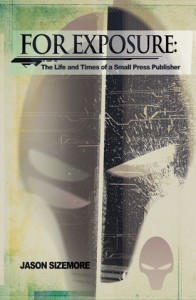
This is fantastic news for Jason Sizemore and it’s been a long time coming. However, with new opportunities comes some amount of growing pains. The distribution deal means that he has to literally change his business model overnight to fulfill demand. To offset the printing costs, he’s started a peerbacker program with several tiers of rewards. While his business is doing well, this growth opportunity means he’ll have to order a large print run of books, which isn’t something he normally does.

This fiscal requirement goes above and beyond our normal business operations and normally, I wouldn’t be opposed to that. In this instance, however, the issue is time. The distributor is anxious to get Apex out on the market. To do that, I need to come up with the initial investment for a full-scale run. So I’m trying out a Kickstarter clone called Peerbackers. Any funds raised by Peerbackers will supplement the additional business loans I’m taking to cover the new production costs. — SOURCE: Our peerbacker Project: Apex Lands Major Distribution

I think it’s pretty cool that a publisher has the ability now to share news as-it-happens and ask readers, authors, editors and fans to be a part of that success. I have a vested interest in this deal doing well, too, for I have a story out now with The Zombie Feed Volume One anthology and a dystopian science fiction story coming out through Apex Book Company this year.

If you’re interested in helping Apex Publications, visit: Apex Publications Lands National Distribution Deal.
Podcast Heaven and the iTunes Model Revisted

I finally started adding my music library to iTunes yesterday and noticed that there were a few beloved albums I had to have. Pandora has been fantastic; there are several artists and albums I discovered through there. So, I went over to the dark side and bought the Tron: Legacy soundtrack, The Seldom Seen Kid album by Elbow and, of course, the remastered radio edition of The Hitchhiker’s Guide to the Galaxy.

BOOOOOOOOOM! Thirty dollars later…

I also added several podcasts that I’ll be listening to. iTunes has two ways to subscribe, so if you have any recommendations let me know. I’m brushing up on my French and Italian as well, so if you’ve fallen in love with any podcasts from France or Italy, feel free to suggest those, too. I’m not quite ready to mention what I liked and didn’t, but there are a few I’m looking for related to yoga (an audio podcast as opposed to video), jewelry-making and pretty much anything comics, game or fiction-related. I’ve already subscribed to a couple of podcasts in geekdom, but there’s sooooooo many it’s hard to know where to begin.

Needless to say, I’m in podcast heaven. I’m very happy I can take classes, listen to audio fiction, and get different perspectives on the things I’m interested in. W00t!

Spending money with iTunes is even easier than shopping at Amazon, which got me to thinking about the iTunes model and the sheer tenacity some publishers use to think about pricing their books at ninety-nine cents. The funny thing is: I didn’t spend ninety-nine cents. Yes, I was buying albums, but even when I looked at songs, I was thinking about how many songs I could get instead of buying just one to build a playlist. Songs are something I can immediately consume. Download and play right there. I can’t “consume” an entire novel in the same time I can play a song. Even then, one novel differs so wildly from another one that I don’t buy books in volume.

Volume, in my mind, is the key to ensuring the iTunes model is successful. That is also what I feel is missing from the “Hey, let’s copy iTunes because they were successful” conversations. Every graph I’ve seen, every story I’ve heard is the same. In order to have profitability increase on a low-priced item, you’d have to move a lot of that items or similarly-priced items over a longer period of time.

Recently, I talked about the difference between marketing and selling your books. When you start mucking around with pricing, that falls under the retailer umbrella, even if you don’t own the shopping cart. The thing is, pricing an item appropriately is difficult to learn on your own because the issue of why people buy anything is very complex. Sometimes demand has absolutely nothing to do with your book; other times it does.

Just as one example, I’ve been looking at audiobooks more often lately. I have two primary concerns. Price and adaptability. If I can’t listen to an audiobook (or fiction podcast) on my iPod or my computer, then I probably won’t buy it. I’ve had several issues trying to listen to audiobooks on CD and I’m pretty much done with that. Most of the CDs won’t allow me to copy the audiobook for that purpose, because it’s considered just that. Copying. I don’t want to distribute it or share it with anyone else; I just want to listen to it in a format I choose. Add pricing concerns on top of that and for books that don’t warrant the higher price tag (e.g. audio performance sucks), then I’ll look for books within a particular range.

It’s a lot easier to make decisions about what music I want to buy, because I can quickly listen to a sample and make a snap decision. With a novel, even if there’s a sample, I’d have to read a preview before I bought it. Music I impulse buy. Books I don’t. Usually, when I buy a book, I already know I want to pick up a copy. I rarely take a chance on an author I don’t know unless it’s a personal recommendation. While I have made snap decisions to purchase a book in the past, it’s nowhere near as fast as how I buy music.

Now, those are some of my buying habits, and I’m assuming they’re probably different from yours. I wanted to share them with you to show how demand is often different for books than it is for music. Yeah, there are exceptions. There’s a reason why Water for Elephants is selling really well right now — the movie. Same phenomenon happens with comics, too. A movie debuts and the comics get a boost in sales. For a few examples: Wanted from Top Cow, Thor and the upcoming Immortals graphic novel from Archaia based on the movie of the same name.

If you want to read some of my past thoughts on the subject, check out weighing in on e-books and your business model is not your neighbor’s, which was reprinted at SFWA.org. I don’t feel my core message has changed at all, but I do feel that it’s becoming a lot clearer to me that there are distinct differences between looking at price from a retailer’s perspective versus a consumer’s or a marketer’s. No matter how much you may read about pricing, it’s often a challenge to understand how it works until you play around with it yourself. Even then, I’m finding out more and more that it can depend on your inventory (e.g. how much you have to offer people for sale) as well.

I’m confident that the publishing industry will sort itself out, and I think it’s pretty exciting that some authors are learning what works and what doesn’t for them. Still, I wish certain people would stop bashing retailers and publishers. I don’t feel that they’re evil. They simply have their own set of expertise that may be different from an artist, musician, etc. These are fascinating times and I can’t wait to see how the dust settles from digital delivery, internet retail and ever-changing buying habits. The stars only know what the right business model is. For me, that is.

Next Posts


February 2012
M T W T F S S
« Jan    
 12345
6789101112
13141516171819
20212223242526
272829  
Back to Top