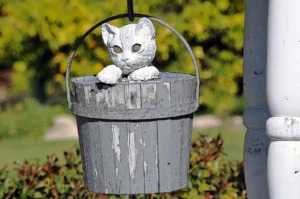
Our metaphorical well of creativity contains all we need to make art: inspiration, motivation, ideas. It’s a repository of our so-called creative juices that we draw upon until we can’t anymore for a variety of reasons. When we can’t create anymore, we get tired, burnt out, exhausted and look for ways to “refill the well”.
An empty well, then, implies that we don’t have any creative mojo left. We are all tapped out. I disagree with this metaphor, because I believe burnout doesn’t just happen from running out of creativity. It can also occur when there are obstacles in our path barring us from accessing the well. That distance, that inability to tap into a fundamental part of who we are, creates blockages that lead to exhaustion, even bitterness.
If you’re not creating, the very first question to ask and answer is: “Why?” Knowing why you aren’t creating is an important step. Here are some common reasons why burn out happens.
“I’m stressed out.”
“I don’t have time.”
“I don’t see the point.”
“I’m tired of getting rejected.”
“I’m tired of being underpaid and overworked.”
Let’s start with the first one. “I’m stressed out.” Stress, whether that’s due to pandemic fatigue or not, is an added burden. It may seem counterintuitive, but self-care can be a great path to creativity. Acknowledging, naming, even describing your stressors can help validate your feelings so you can deal with it. Sometimes, it might be as simple as taking a break from social media or falling into a beloved book to give you some relief.
Self-care can also be something small and free or inexpensive. If you “hit a wall”, you might get some fresh air, listen to your favorite song, text a friend, share a joke, etc. Twenty-minute naps, free writes, or meditations are also great!
Sometimes, I go to bed early when I hit that wall. Right before I drift off to sleep, I ask a question about my creative project. More than once, I wound up dreaming about the work and my subconscious figured out a path by the time I woke up.
My goal, here, is not to say you should eliminate all stress because that’s not realistic. Being a human in 2022 is incredibly stressful! I am suggesting that by acknowledging it, caring for ourselves, and getting a little distance from it you might find a wonderful path to draw on your creativity once more.
Walking through another example… Let’s tackle: “I don’t have the time.”
I’m nodding along with you, because time is a precious commodity and a resource. No question about it. You do not have the time. So, to get creative you’d need to find it. That bit, finding the time, is a process that sucks. Either, you have to give up something or you have to sneak working on your goal in a few minutes here and there. It can, in many ways, feel like a punishment rather than a necessary part of decision-making.
My suggestion, here, is not to start by analyzing your time or doing yet-another-deep-dive into what you are or aren’t doing. You are doing PLENTY! Instead, try to change your schedule/routine before adding anything else—including creative time—to your plate if you can.
The other thing about not being able to find time, is that sometimes this is code for “What’s the point?” or “I don’t know where to start.” Or, sometimes even more insidiously, imposter syndrome kicks in and we defeat ourselves before we start. “Why should I create? Who’d care? Why bother?” Only you know if that’s the case and “not being able to find the time” is a way to rationalize the real reason you aren’t creating.
Of course, I can’t tell you how to ask and answer your specific questions, because you know yourself best. I also don’t know your “what”. What motivates you? Is it a person? A goal? A reward? What? Knowing that can be incredibly helpful, because it gives you something to aspire to or hope for.
If your answer is “I don’t know what motivates me,” try journalling or creating a vision board to find that out. You might discover that the reason why you’ve lost your motivation is because you, as a creator, have changed and you need new sources of inspiration you haven’t sought out or used regularly in the past.
Asking yourself questions and finding answers is one technique you can use to be creative again, because it defines, acknowledges, and validates how you’re feeling by giving you a path forward. Sometimes, however, the path forward isn’t “the future”. When you literally can’t plan, you might consider revisiting the past, remembering what you loved, how you used to play, what your happiest moments were.
The last thing I want to say about refilling your well, is that if these paths and techniques sound like a lot of work? Then they are too much for you right now. I can’t stress enough how fresh perspectives don’t typically come from analyzing or following the same path over and over again. Sometimes, you do have to shake things up—which is MUCH harder to do right now—to clear a path.
My solution to refilling my creative well has been to use “one small thing” for my goals. What can I do right now, in this moment? What small, precious thing can I do? Those small things might include: a hundred words, a scene, a chapter, reading a chapter, writing a prompt, writing a pitch, etc. Then, I log that information in a journal. Over time, “one small thing” becomes visible for me, a journey that becomes more evident with each passing day.
I hope, after reading this post, you feel encouraged to find solutions for your creativity blocks. What you’re experiencing is going to be different from me, and I recognize and acknowledge that neurodiversity and your health absolutely factor into this conversation. If you need additional encouragement, however, let me say this: I believe in you. I really, really do! You can find your mojo again. Or maybe, it will find you.
If you are able to create right now, could you please do me a favor? Comment on this post or blog about how you’ve kept creating during the pandemic. Every little bit helps right now, and you never know…someone might stumble across your post/newsletter/update and read exactly what they needed to. Thank you!