
• Home
  • About
  • Archives
  • Contact
  • Recent Publications
  • RSS
Subscribe: Posts | Comments | E-mail
  • Be ProfitableMarket, sell and get paid.
  • FeaturesGuests and other goodies.
  • MeMy work, life and shameless self-promotion.
  • ToolsHelpful Tools to ply our Trade.
  • WritingWriting is what we do.

MLV WritesBlog of Monica Valentinelli, Writer & Content Consultant

Posted on November 12, 2009 - by Monica Valentinelli

Why Your D&D Game Doesn’t Make a Great Novel

Game Design + Writing Writing

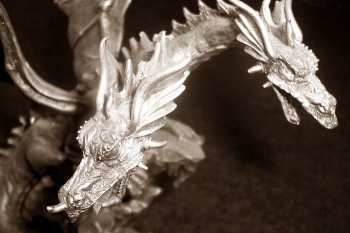
DragonHave you heard the line, “Your D&D game won’t make a great novel?” If you’ve heard me speak on panels before, or if you’ve read several submission guidelines from agents or publishers, you might have. I’d like to tackle why.

First, let’s get all the bad mojo out there on the table by saying something completely untrue. “Oh, that evil publisher doesn’t like gamers…” Several well-known authors I’ve met are either gamers themselves or their kids are. And by gamers, I mean everything from tabletop to video and card games. Also? Publishers aren’t evil. You may get frustrated by their decisions, but publishing a book — even if it’s potentially your book — is integral to their overall business. To imply that they’re evil means that a business is a biological entity with a soul. Yes, some businesses have been accused of being soul-less, but that’s actually a correct statement. A better description of a business would be to think of it as a large, gigantic clock. You only see the face that tells the time, but there are lots of moving parts. Each of those “parts” may have a soul, but together they act as a publisher who wants to produce books that other people will want to purchase and read – they certainly aren’t there to make a writer’s life miserable.

So now that we’ve got that out of the way, let’s get back to the topic at hand. Why won’t your D&D game make a great novel?

Here’s a rhetorical question: have you heard this story before? It’s about an elf, a ranger, a dwarf and a mage…they wake up at this inn…they don’t have any memories…they face this really evil overlord guy who–

Yes. Yes, I’m sure you have. So has everyone else on the planet.

The first lesson here, is that those characters and that plot have been beaten to death so badly, they’ve become their own cliche.

The second lesson I’d like to offer, is that writing a story not the same as “writing up a game” as a story. When you “write up a game,” you are telling the story as it happened during play, because you believe your game is so exciting other people will want to read about it. However, these stories often turn into a dictation of events, which causes the story to sound forced and the characters to become inflexible. When you write a story, you have more freedom because you don’t have to stick to a specific series of events, partly because the writer hasn’t already experienced what had happened.

Third, I’d also like to point out that many new writers don’t realize that when you write a story about your D&D game, you are engaging in a form of writing called “fan fiction.” In other words, you don’t “own” the story that you’ve created and legally, you aren’t able to sell what you’ve written. (Be sure to read my post about the difference between shared world, tie-in and fan fiction if you’re confused).

Yes, there are people who write for DRAGONLANCE and other tie-in novels for established settings. They do have some challenges writing novels, because they are writing in a world that has already been created. This type of writing can be more difficult than writing original fiction, because there are often strict guidelines that the writers and editors have to follow. (If you’ve ever worked on tie-in or media fiction, it’s a lot like putting a puzzle together.) However, this form of writing isn’t the same as “writing up a game,” because the story isn’t about a “real life” game that’s being played, it’s about a story set in the world of D&D.

If you want to share the story about your favorite game, I recommend reviewing Wizards of the Coast’s Fan Site Policy. If you want to write media, shared world or tie-in fiction, that’s an entirely different path and I encourage you to read Wizard of the Coast’s book submission guidelines.

Regardless, if you’re serious about your love of gaming and honing your craft, I’d encourage you to take a more professional approach. Please, do yourself a favor and conduct a little bit of research before you start typing away. Writing a novel is not as easy as it looks, and you don’t want to get off on the wrong foot.


This entry was posted on Thursday, November 12th, 2009 at 2:14 pm and is filed under Game Design + Writing, Writing. You can follow any responses to this entry through the RSS 2.0 feed. You can leave a response, or trackback from your own site.

7 Comments

We'd love to hear yours!


  1. Visit My Website

    November 12, 2009

    Permalink

    zeke said:


    I think it’s also worth noting that things you don’t want to read about anymore are still fun to pretend to do. Saving the princess, or freeing the town from bandits are awesome game material, but really lame book material.


  2. Visit My Website

    November 12, 2009

    Permalink

    Joe Crow said:


    Elizabeth Moon, author of The Deed of Paksenarrion might not completely agree with you on that. Neither might Raymond E. Feist (the Midkemia books). Nor Steven Brust (the Draegaera books). All of those books started as D&D settings. Hell, the Paks books are pretty much set in the world of Greyhawk with all the names filed off.

    Not that Gygaxian fantasy doesn’t get a little stale after a while, but it’s not necessarily the kiss of literary death.


  3. Visit My Website

    November 12, 2009

    Permalink

    John said:


    Very true. I once had a friend of mine tell me my writing sucked compared to his multi-part epic about how DnD character whose very name was stolen from another game. His work read like the events of the game, which I admit was already predictable for me because I was in it.


  4. Visit My Website

    November 12, 2009

    Permalink

    Monica Valentinelli said:


    If you notice, in my post I mentioned that “writing up a game” is different from writing a story set in a game. As a writer of game fiction myself, I thoroughly support shared worlds, media and tie-in authors.


  5. Visit My Website

    November 12, 2009

    Permalink

    C.D. Reimer said:


    I have the opposite problem with my first novel that I’m writing based on my six years as a video game tester. Since my fictional video game company originally made board games in the 1970s, I’m writing about the games in all the various forms over the years.

    But that’s all background material. I still have to deliver a blood-splattering, gut-wrenching and heart-ripping ghost story that works for the non-gamer readers. That’s hard.


  6. Visit My Website

    November 12, 2009

    Permalink

    Jim Ryan said:


    This is why I’d say that if someone were writing a story based on events in their game — issues of legality and filing off the serial numbers aside — the important thing would be not to feel compelled to stick to what happened in the game itself, kind of in the same way people dramatize fiction “based on real events.” Of course that does go outside the scope of just “writing up a game” and is instead telling a story using the game’s events as inspiration. I have a project on the back-burner (sitting there smoldering next to a bunch of other poor, neglected projects) for a story based on a horror-western game I ran (it wasn’t Deadlands though there were a few minor similarities). When I eventually tackle it again, I pretty much plan to rewrite the whole story from the ground up, throwing in characters and events from the game as appropriate, but not really writing up the events as they happened. I’ll leave that kind of thing to the actual play audio & video recordings folks put out on their gaming podcasts. :)


  7. Visit My Website

    November 22, 2009

    Permalink

    Doug said:


    Since I enjoy both running games and writing stories, I’ve definitely found that they are different art forms in a number of ways. That being said, there are a ton of stories that started off as D&D games or other kinds of roleplaying games, some of which have been very commercially successful.

    The thing is, in my experience, you can’t write a game like a novel and you can’t write a novel like a game. Given that, though, if you’re good at writing stories, then your D&D game can still become a good story. You just can’t write it as a D&D game.

    A good test might be – write up a few chapters, and then give them to a friend who likes the genre but doesn’t play roleplaying games. If they are confused or bored, it might be because you’re writing the story like you’d write a game. I think there’s a lot that gamers will tolerate in terms of story because we like games so much, and we have fun recognizing what’s going on (what level spell was that? Was that a critical hit?) in gaming terms, even if it’s pretty dull in story terms.


Leave a Reply


Here's your chance to speak.

Click here to cancel reply.

  1. Name (required)

    Mail (required)

    Website

    Message

  • My Recent Releases

    The Queen of Crows


    Download THE QUEEN OF CROWS e-book at DriveThruHorror.com


    Family Games: The 100 Best


    Order through Amazon.com


    Buried Tales of Pinebox, TX


    Available at Amazon.com

    Available at DriveThruHorror.com
  • Current Project

  • Where in the World is Monica?

      follow me on Twitter
    • The Archive

    © 2008 MLV Writes - Blog of Monica Valentinelli, Writer & Content Consultant